Ketchup with cinnamon
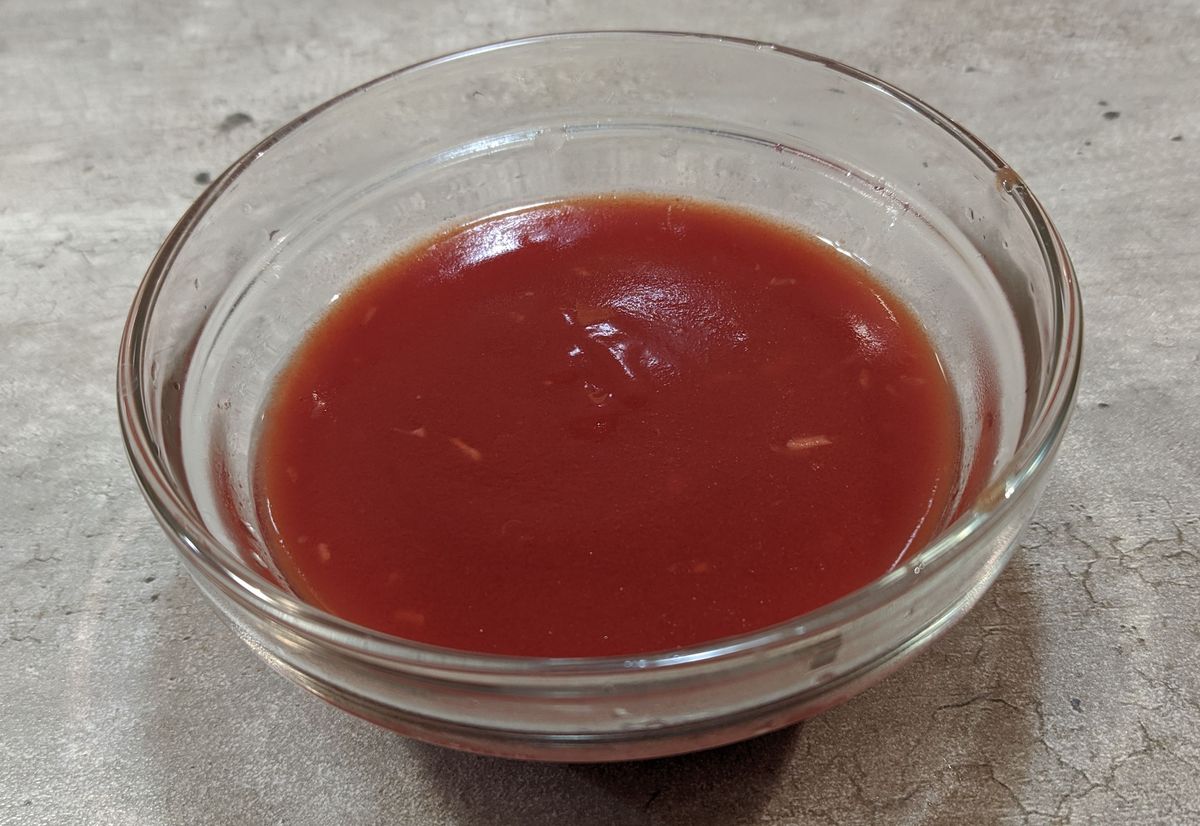
Making ketchup at home is a somewhat labor-intensive process. The most difficult thing is to boil down the tomato juice and not let it burn or escape. If you can handle this, then half the job is done. There is not much left: add spices and bring it to taste, as the chefs say.
Adjust servings in the full version
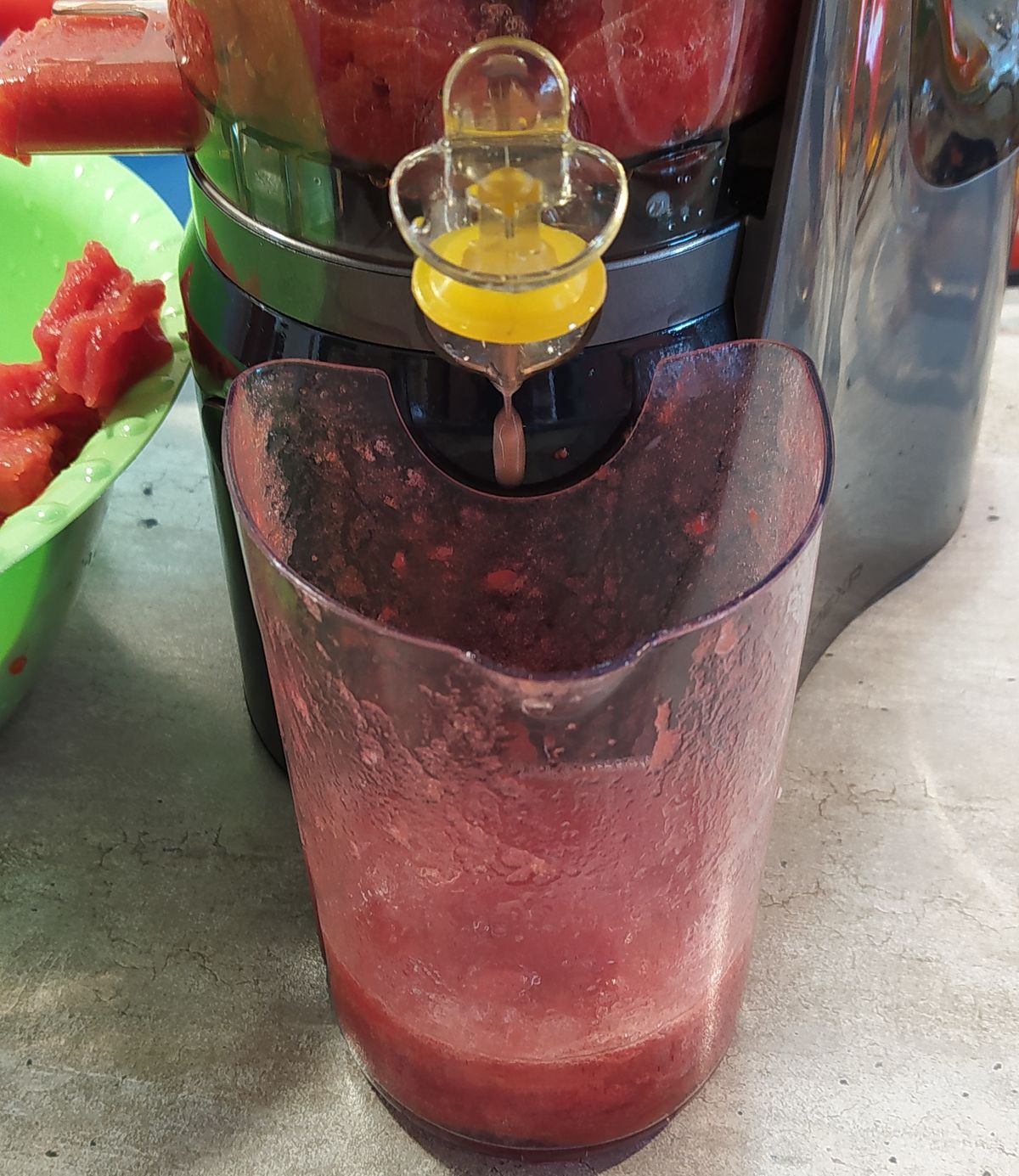
At the first stage, you need to extract juice from the tomatoes. The easiest way to do this is with an electric juicer: literally 10 minutes and almost 5 liters of juice are ready.
If you don’t have an electric one, a manual one will do. You can use a special attachment for a meat grinder. If you have neither one nor the other, you can puree the tomatoes with a blender. But in this case, the ketchup will not be homogeneous. But it will still be delicious. I made ketchup both with a manual juicer and with a blender until I got a juicer.
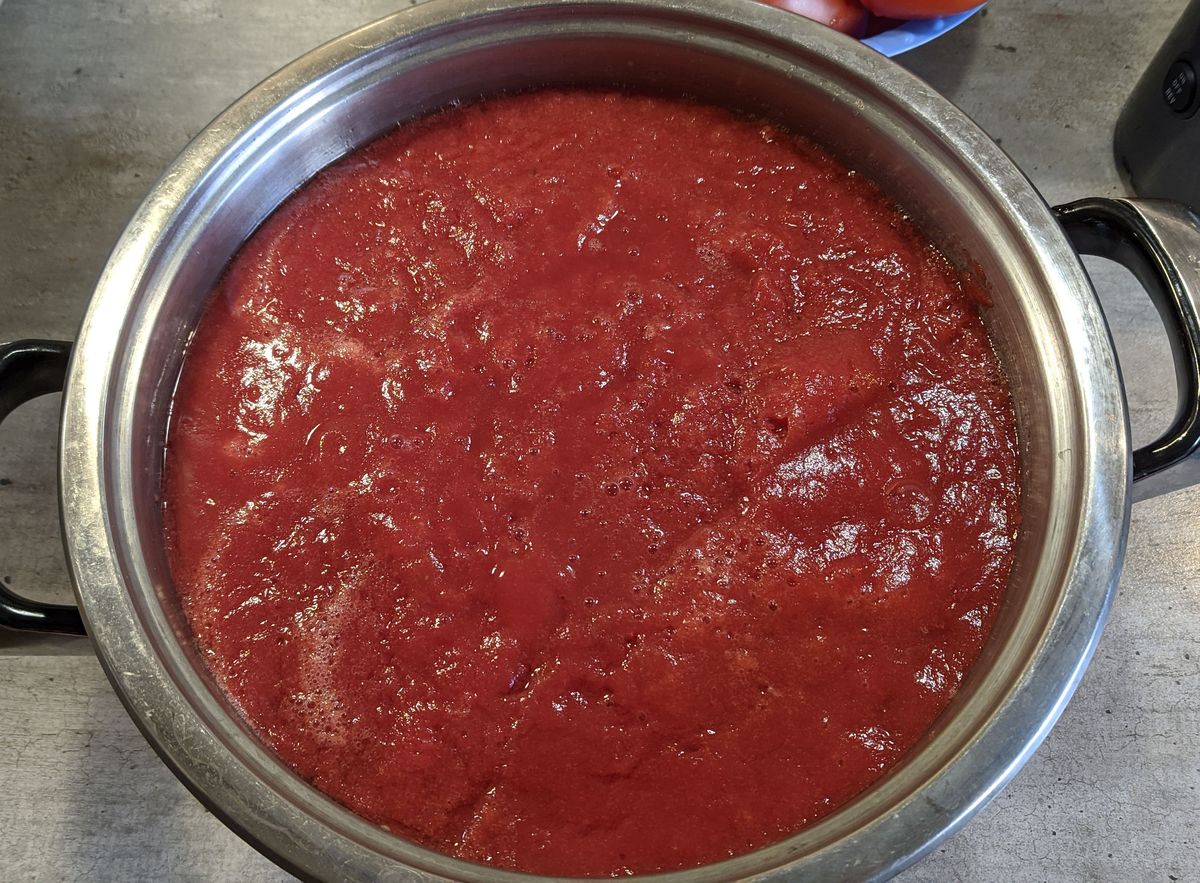
You need to be very careful when choosing a pan for boiling tomato juice. It seems to me that the ideal option is a steel pan with a thick bottom. Aluminum would also be good. But it is better not to use enameled one - there is a high risk that the tomato pulp will burn to the bottom, and the product will be hopelessly spoiled.
The fire must be set so that the boiling process is intense. I set the heat to above medium. Be sure to stir the juice, otherwise it will burn.
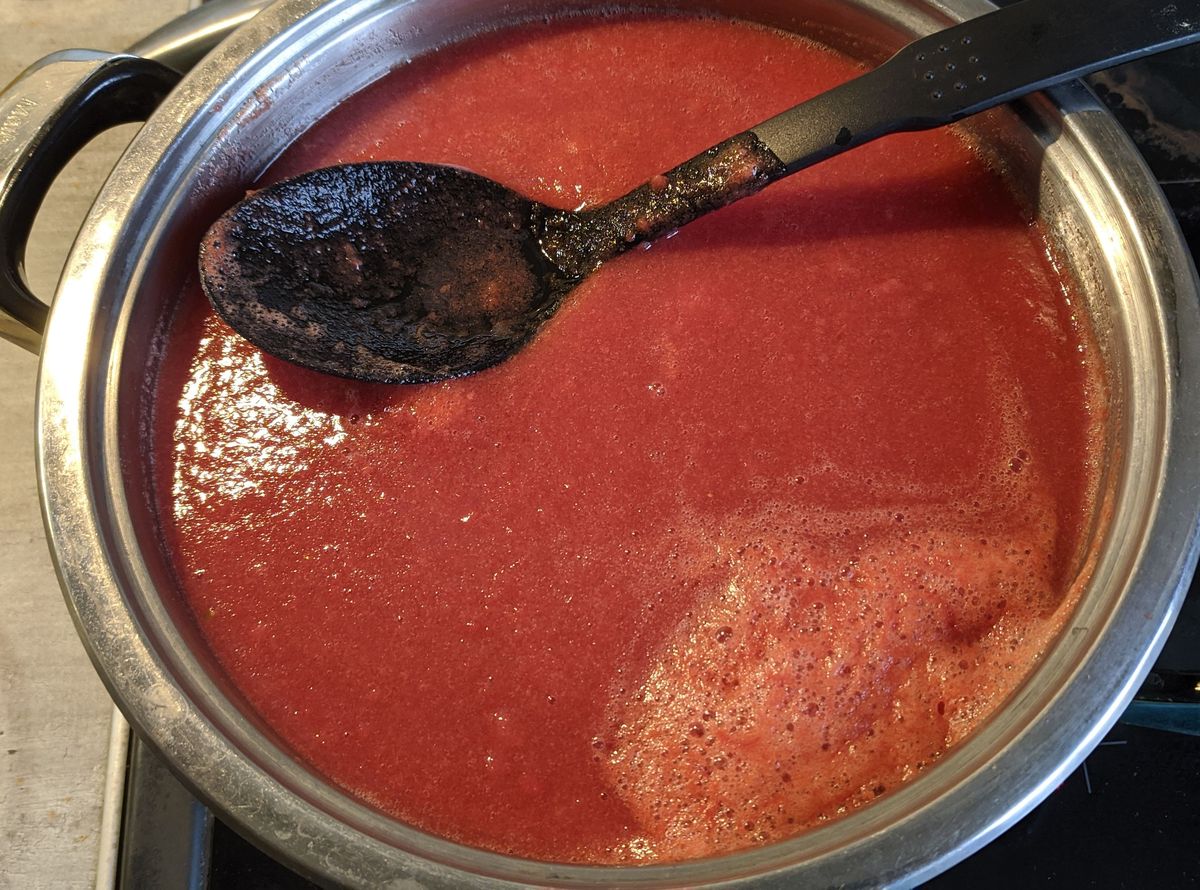
Skim off the foam as the juice heats. Once the foam is removed, add the peppercorns. Remove them before adding the starch.
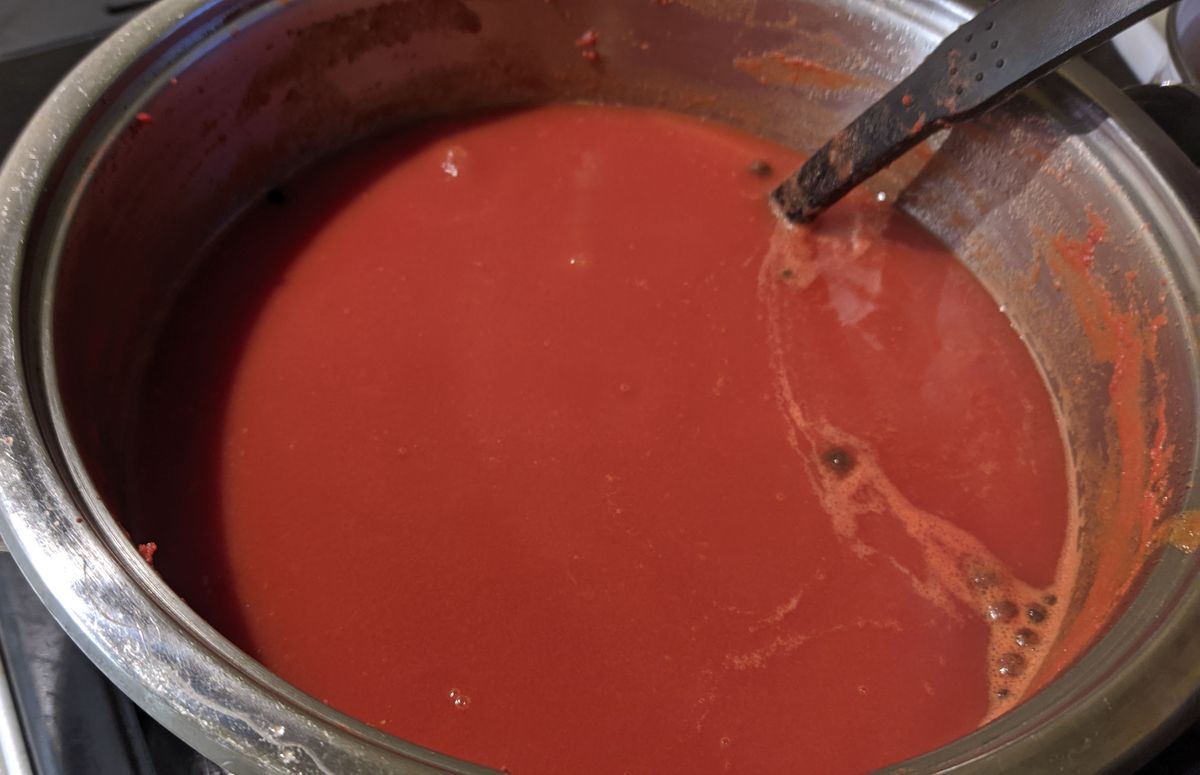
Boil the juice by about half the volume. This takes about an hour and a half. The photo shows how much less juice there is in the pan.
Garlic, pass through a press or grate on a fine grater. Place in boiling juice.
Now you need to add salt, sugar, vinegar and cinnamon. And red pepper, if you like. I'm not adding.
Measure out the entire portion of salt and sugar, each into a separate bowl. Pour about 2/3 of the volume into the boiling tomato mass. Stir and taste, adjust the taste if necessary.
Add the vinegar gradually too, but add all the cinnamon.
Since the mixture is hot, and ketchup is usually eaten cold, you should also try it cold. I do this. I take a tablespoon of tomato mass, pour it into a small mug, cool it completely and then taste it.
While performing all these manipulations with adding spices and tasting, do not forget to stir the ketchup so that it does not burn.
When salt, sugar and all other spices have been added and you are satisfied with the final taste of ketchup, proceed to the last step: adding starch.
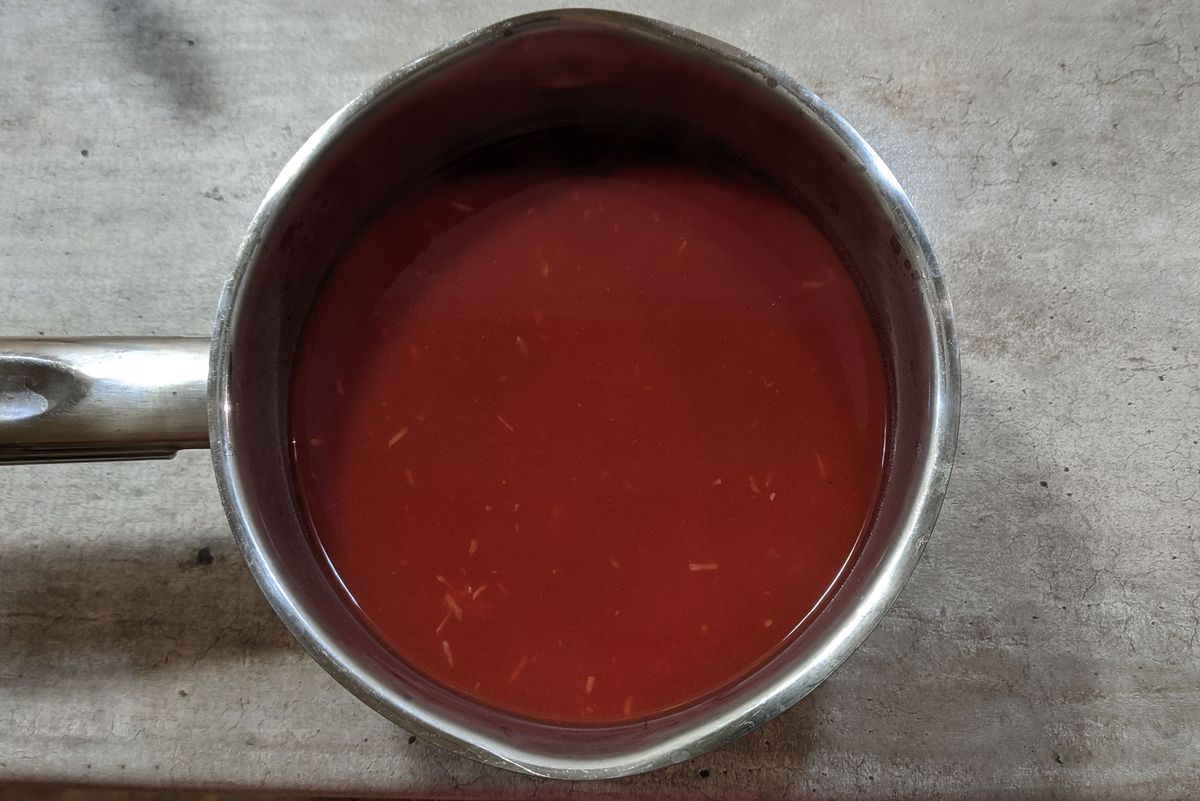
Pour approximately 1 liter of tomato juice into a small saucepan or stewpan and place it on the adjacent burner.
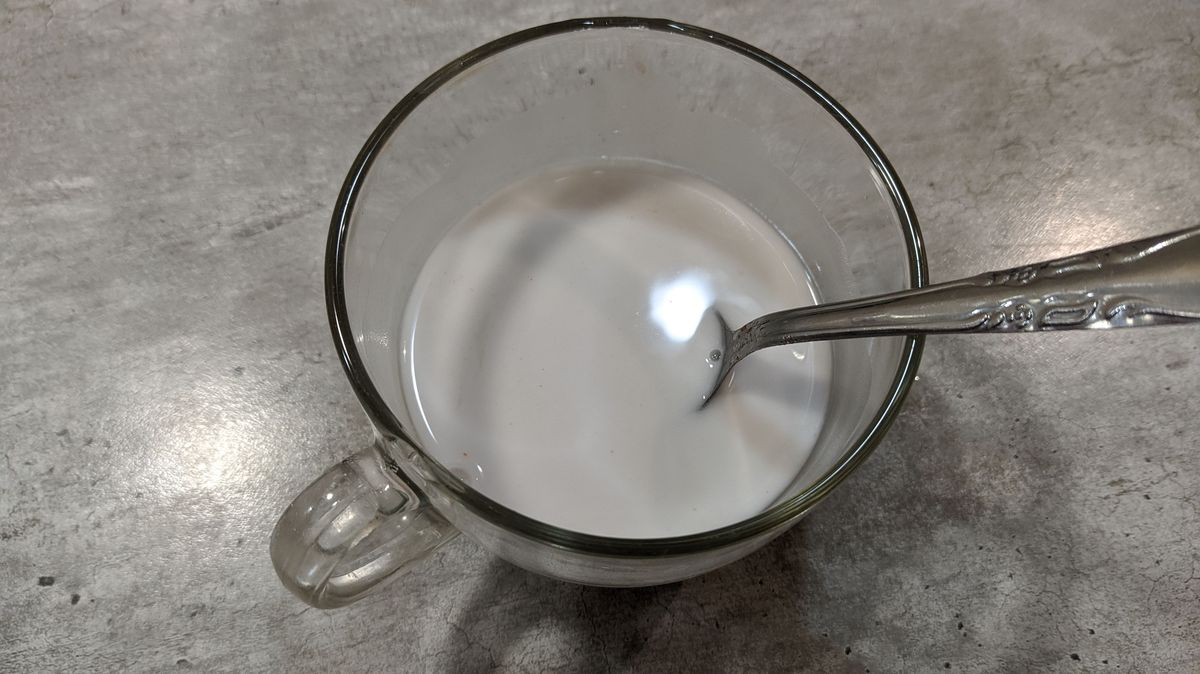
We dilute starch in cold water.
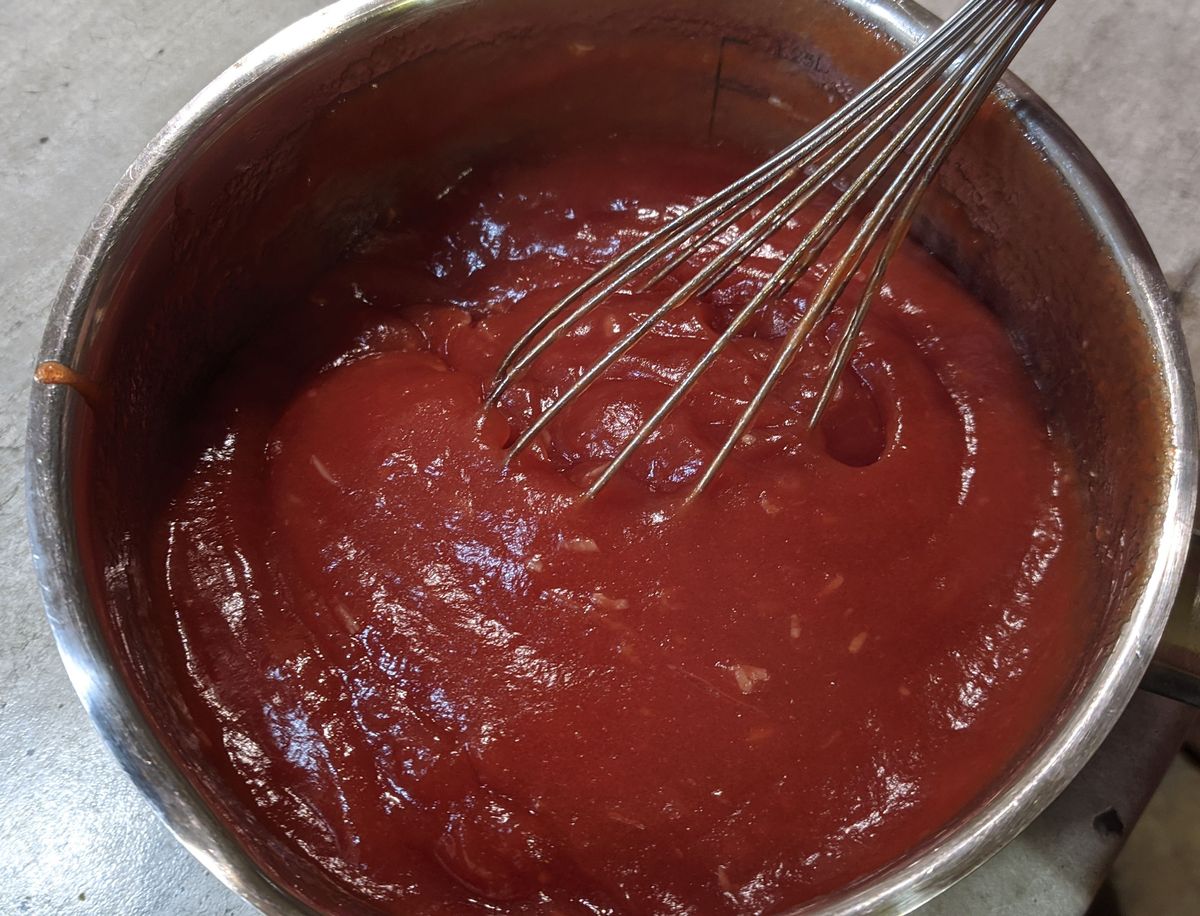
Pour the diluted starch into boiling tomato juice in a small saucepan. Stir the contents quickly and quickly so that the starch is cooked evenly and there are no lumps left. It turns out to be such a thick paste.
Stir the thickened tomato mixture back into the main saucepan until evenly combined.
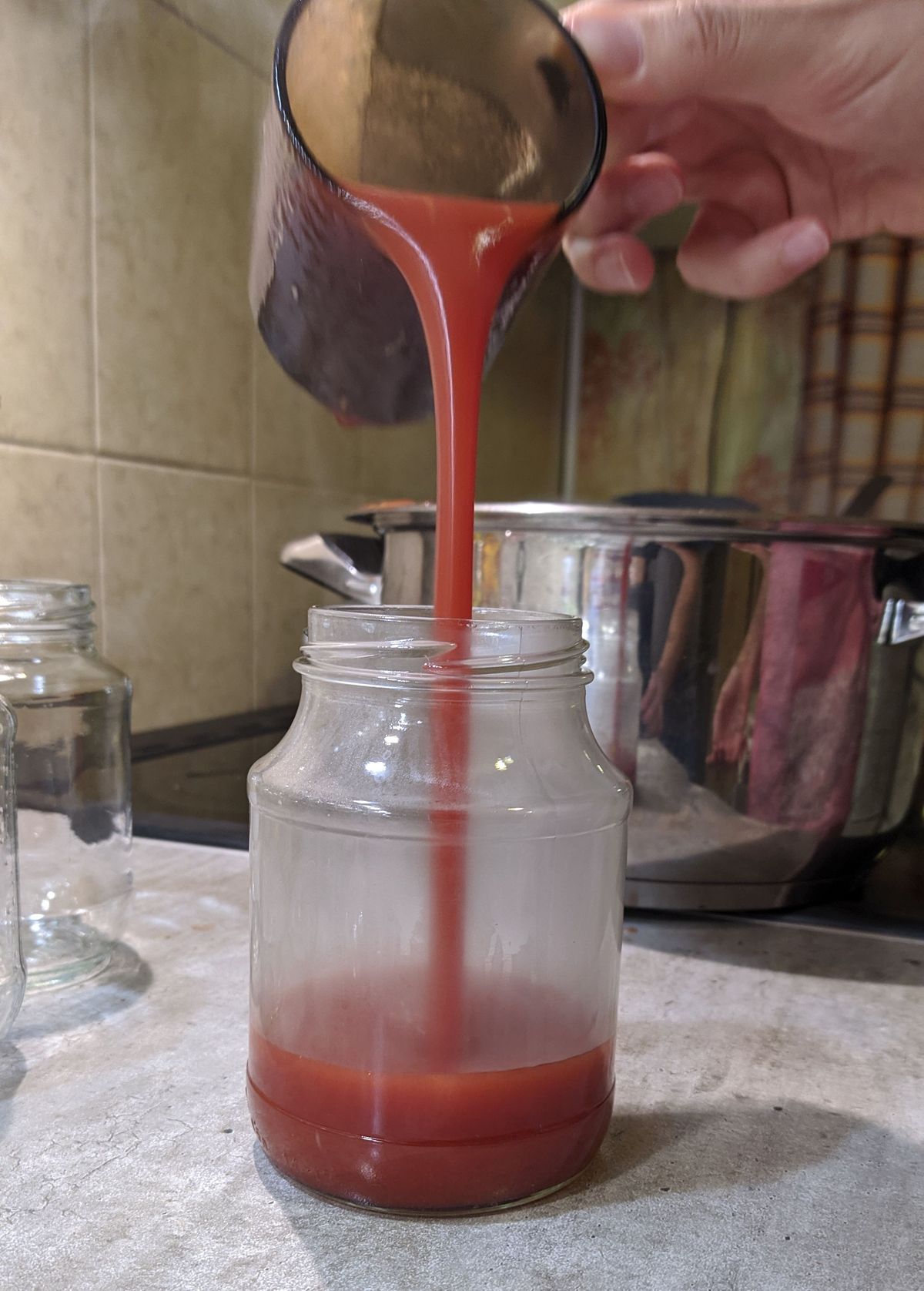
Bring the ketchup back to a boil, fill clean sterilized jars, seal and wrap in a blanket for 8-10 hours.
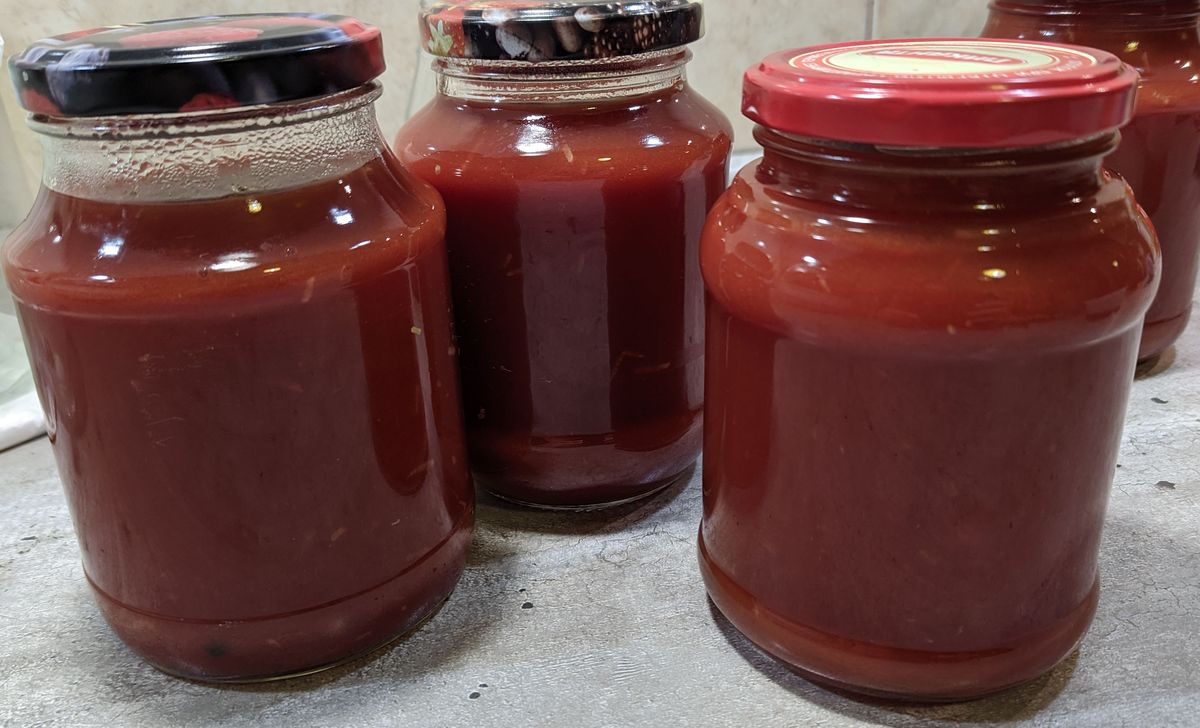
One serving yields 5 half-liter jars of ready-made ketchup
and a little more.